Pricing
AI Video Cost per Second: How Video Models Are Priced
How much an AI video costs per second on Seedance, Wan, Kling, MiniMax and Gemini Omni, why resolution changes the price, and how to keep the bill low with drafts and quotes.
AI video is priced by the second. The price of a clip is its length times a per-second rate, and that rate depends on the model and the resolution. With Makemancer, the cheapest drafts start at 15 credits ($0.15), a 5-second Seedance 2.0 Mini clip at 480p costs 15 credits ($0.15), and a premium 5-second Seedance 2.5 clip at 720p costs 218 credits ($2.18). It is pay as you go: one-time credit packs, no subscription, and failed jobs are refunded automatically.
How video pricing works
Three things set the price of a clip.
1. Length. Most models charge per second of output. A 10-second clip costs twice a 5-second one. Seedance 2.0 Mini at 480p is 15 credits for 5 seconds and 30 credits for 10.
2. Resolution. Higher resolution multiplies the per-second rate, often by more than the change in sharpness suggests. The same 5-second Seedance 2.0 Mini clip costs 31 credits at 720p. For Wan 3.0 the step from 480p to 1080p takes a 5-second clip from 33 to 130 credits.
3. The model. Models from different makers have very different rates. A cinematic model with many references costs more per second than a draft model built for speed.
A few models are priced differently:
- By input video length. Tools that work on a video you already have, such as Sync 3 lip-sync, Kling 3.0 Motion Control, DreamActor v2 and the Topaz video upscalers, charge per second of the source clip. A longer source costs more even if you only change part of it.
- Per request. Hailuo-02 Pro makes a fixed 6-second clip and has one price per clip.
- Draft modes. Seedance 2.5 has a draft setting that renders at 480p for a lower price, so you can check the motion before paying for the final.
Prices by model
These are the video models most people use, with the credits for a typical setting. The setting each price assumes is shown under the number. One credit is $0.01.
| Model | Best for | Credits |
|---|---|---|
| MiniMax H3 Max Turbovideo/minimax-h3-max-turbo | Fast, low-cost drafts, from text or a first frame. | 25480p · 5 s |
| Wan 3.0video/wan-3.0 | Low-cost clips with a steady frame, 2-30 s, 480p to 1080p. | 33480p · 5 s |
| Seedance 2.0 Minivideo/seedance-2.0-mini | Short clips with native sound, 480p or 720p. | 15480p · 5 s |
| Gemini Omni 1.1 Flashvideo/gemini-omni-flash | The default model: text, images or a video in, audio out. | 40720p · 4 s |
| Kling 4.0video/kling-4.0-omni | 3-30 s at 720p or 1080p with first, middle and last frames. | 157720p · 5 s |
| Seedance 2.5video/seedance-2.5 | Premium cinematic shots with many references, 4-30 s. | 93480p · 5 s |
| MiniMax H3video/minimax-h3 | Close-ups and detail at 768p or 2K. | 64768p · 4 s |
The full list, including talking avatars, lip-sync and upscaling, is on the pricing page.
The same still, two very different prices
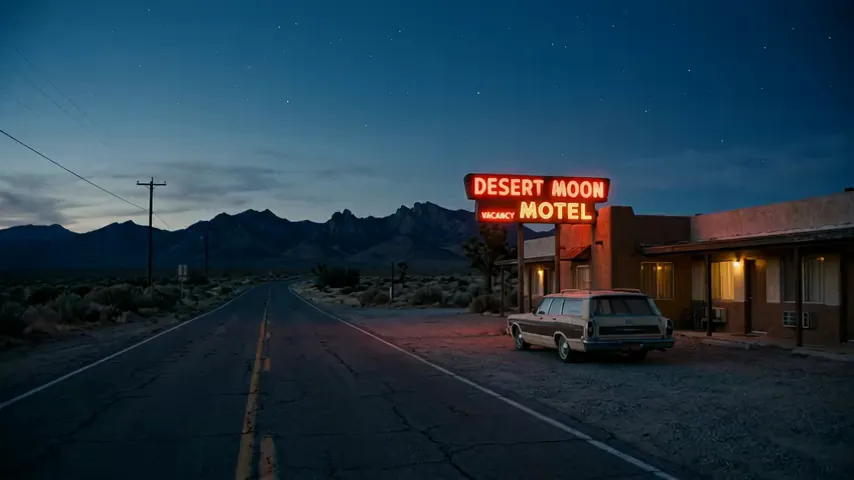
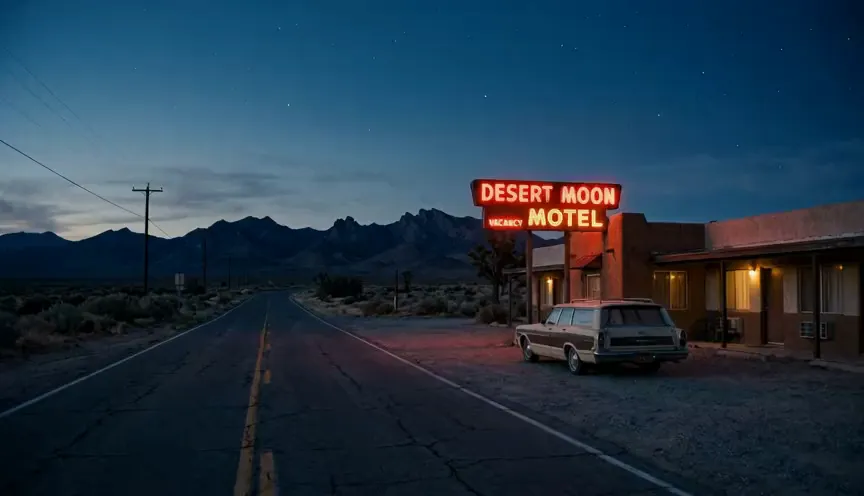
Price differences are easiest to see on one input. We animated the same desert motel still on two models at 480p. Wan 3.0 made a 5-second clip with a car's headlights approaching:
Grok Imagine 1.5 made an 8-second clip with subtler motion, and at those settings it costs far more:
Both are usable. If the shot only needs gentle movement, the cheaper model is the better buy. The captions show the credits each one used. More side-by-side clips are on the video model comparison.
What a credit pack buys
Packs are one-time purchases, from $10. Larger packs add up to 15% bonus credits. This is what the smallest pack buys at two common settings:
| Generation | Cost | With 1,000 credits ($10) |
|---|---|---|
| Seedance 2.0 Mini clip (480p, 5 s) | 15 | 66 |
| Seedance 2.5 clip (720p, 5 s) | 218 | 4 |
How to keep the cost down
Draft at the lowest resolution. Several models offer 480p; use it, or the lowest tier your model has, to judge the motion and the framing, and only render the keeper at 720p or 1080p.
Keep clips short. Five seconds is enough to see whether a shot works. Several short clips joined in an edit cost about the same as one long one (joining adds a few credits) and are easier to redo.
Approve a still first. For image to video, make the first frame as an image, which costs a fraction of a clip, and animate it only once it looks right. A bad first frame is the most common reason to redo a video. See image to video for the workflow.
Ask for a quote first. Add "tell me the cost first" to any request. Claude or ChatGPT returns the exact credits for that model, length and resolution, and waits for your answer. For a batch, ask "how much would four variations cost?"
Pick the model for the job. A premium model is worth it for a hero shot. For a background loop or a social draft, Wan 3.0, Seedance 2.0 Mini or MiniMax H3 Max Turbo usually do the job. Our guide to the best AI video model in Claude goes through the choices.
A worked example: where mistakes get cheap
Say you are making a 20-second ad from four 5-second Seedance 2.0 Mini shots, and some ideas will not work. What matters is where each bad idea gets caught.
- At the still. A Nano Banana 2 first frame at 1K costs 12 credits. A wrong composition, prop or color caught here costs only that.
- At the 480p draft. A 5-second draft costs 15 credits. Motion that looks wrong, such as a camera move that is too fast, is cheapest to fix here.
- At the 720p final. A 5-second final costs 31 credits. If you only render shots you have already approved, you pay this once per shot.
A redo at the final stage costs more than a still and a draft together. The stills and drafts add a little to a plan that works the first time, and save a lot on one that does not. Ask Claude to add up the plan before you start; it quotes the whole batch.
Refunds and expiry
- Failed jobs are refunded automatically. If a generation fails on the provider's side, the credits go back to your balance. You do not need to ask.
- Credits never expire. Buy a pack now and use it next year.
- Unused credits can be refunded within 7 days of purchase.
- No subscription required. Packs never renew or expire, and you top up only when you need more.
To see where your credits went, ask Claude for your recent generations. It lists each job with its model and cost.
Questions
How much does AI video cost per second?
It depends on the model and resolution. The cheapest clips start at 15 credits ($0.15) for a short low-resolution draft, a 5-second Seedance 2.0 Mini clip at 480p costs 15 credits, and a 5-second Seedance 2.5 clip at 720p costs 218 credits.
Is there a pay-as-you-go AI video generator without a subscription?
Yes. Makemancer sells one-time credit packs from $10 and charges each clip by its length and resolution. No monthly fee is required, and pack credits never expire.
Do I pay for failed videos?
No. If a generation fails, the credits go back to your balance automatically.
Why does 1080p cost so much more than 480p?
A 1080p frame has several times the pixels of a 480p frame, and the providers charge for that compute. Most models multiply the per-second price as resolution goes up.
Can I get a price before the video is made?
Yes. Ask Claude or ChatGPT for a quote first. It returns the exact credits for that model, length and resolution, and nothing is charged until you approve.
Keep reading
 ComparisonThe Best AI Video Model in Claude (and ChatGPT), by JobWhich video model to pick in Claude or ChatGPT for drafts, cinematic shots, product clips, long takes, talking avatars and motion transfer, with clips made from the same still.November 5, 2026 · →
 How-toHow to Generate Videos in Claude CodeClaude Code can't render video by itself, but it can with an MCP server. Install the plugin, turn a still into a clip or write a video from text, and save the files into your project.November 5, 2026 · →